New Solutions to Old Problems

Dominic Bosco / Prevention Magazine

Drilling may be on the way out
-at least out of your family's life-
if you heed the words of these dentists


PREVENTION has been talking to some dentists, and we have some good news and some bad news. We're going to give you the good news first.

The terror of the dentist's office, that buzzing nemesis that sends a chill through your very marrow even before it actually starts making its way there in person - the dentist's drill - may soon be little more than a relic. Whereas the fearful drill is now actually a part of the dentist's chair itself, in years to come the dentist may have to roll the monster out of the closet and wipe the dust off before putting it to occasional use.

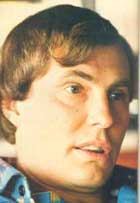
 Sound like a PREVENTION editor's typewriter dream? (We don't smoke pipes around here.) Actually, the fact that yopu could think of such a thing as a dream bears out what one of the dentists we talked to said. Robert O. Nara, D.D.S., from Houghton, Michigan,* told us, "People almost universally believe the untruth that dental disease is inevitable. The dental profession itself views disease as something to be supressed but not effectively prevented." And when Dr. Nara says prevention, he's not talking about the TV commercial's brand of prevention.

 "On TV you see this kid coming home from the dentist's office bragging that he only had one cavity this time. Then the commercial recommends that you see your dentist twice a year. Well, figure it out: If the kid has 'only' one cavity at every checkup, and he goes twice a year from age six to 21, by the time he's 21 he'll have had 32 teeth filled! That's prevention?

 That's not preventing anything. It's just superficially controlling it a bit," he maintains.

O.K., so prevention is something you expect to be talked about in this magazine. Preventing dental disease is, of course, the sure way of keeping the drill out of your mouth. But there's more good news: "Doctors, dentists and other people have no trouble understanding other physical healing processes. Broken bones knit, cut tissues heal, hair and fingernails grow back after being cut. The body restores itself naturally. Why can't the sae thing happen with teeth?

That's quite a question and Dr. Nara wouldn't have asked it unless he had a good answer. Apparently, the same thing can happen to teeth.


How Does A Tooth Heal?


Dr. Nara told us just how much healing could be expected from a tooth: "It ranges from some little pinpoint cavities here and there all the way to a tooth that's rotted right off at the gum line, you're not going to grow a whole new crown on it. The little ones will heal, remineralize up to about two millimeters deep. What will happen in a tooth that is severely decayed is that the stump will firm up. Instead of being soft and mushy, it develops a leathery consistency. A healed tooth will remain resistant to decay as long as the oral conditions are beneficial."

Erling Johansen, D.M.D., Ph.D., a dental researcher at the University of Rochester, also told PREVENTION that teeth can heal themselves. "The extent of remineralization depends on the location of the cavity. If the cavity is in an area where the saliva has access to it - and if you have sufficient saliva - that cavity can be hardened. The cavity won't progress any further. If the person decides he or she wants it filled for aesthetic reasons, you can just touch it up a bit. The drilling is much simpler, then."

Well, that's the good news: Your trips to the dentist don't have to make you feel that enough oil to solve the energy crisis has been discovered somewhere in your jaw. But we did say there was some bad news, too. Here it is: There's no miraculous treatment or pill newly discovered that's going to prevent dental disease that's already there. There's no magic here - other than the magic of your body's natural healing powers.

Fortunately, there's more good news than bad. After we got the good news and the bad news from the dentists we talked to, we didn't let them get off that easy. we asked them how we could all make that good news part of our dental future.


Nutrition Very Important


As you might expect, nutrition plays a big part in keeping your teeth healthy. In fact, checking out a person's nutritional state is the first thing Joel Knapp, D.D.S., of Hendersonville, Tennessee, does. "First, I take a blood pressure reading to get an idea of the condition of the blood vessels. A different dental treatment has to be worked out for someone with high blood pressure. I take a health history and get information on digestion, allergies, previous illnesses, the person's personality and fears regarding dental treatment - and diet.

"Then, especially if the person has a lot of problems, we do a blood analysis, and I go over the test results with the person. We look at calcium, phosphorus, glucose, cholesterol, triglycerides and show what elements are high and which are low. Then I tell them what they can do with their diet and carbohydrate metabolism."

Dr. Knapp, by the way, also teaches nutrition at nearby Volunteer State Community College. and he has a good reason to believe in the nutritional-preventive approach to dentistry. "I started getting into this about two years ago. My son was hyperactive. He had rapant tooth decay and here his father was a dentist! We took a hair analysis and found that his sodium was just out-of-this-world high. and a lot of other things were high. So we got off the salt, got off the lunch meat, got off the preservatives. We got off the junk food and the sugar. But he still had cavities. Then we suspected he might be allergic to homogenized milk. Got him off the milk and he hasn't had a cavity since. and he's not hyperactive anymore. He went from just barely passing kindergarten to making A's and B's now."

Just like he took Junk food out of his family's life, Dr. Knapp recomments that his patients do the same. "I try to get them to take the soft, high-carbohydrate foods out of the diet. Thjese foods get impacted and cling to the teeth and cause decay. Detergent foods that require vigorous chewing stimulate the gums, clean the teeth and inhibit the formation of plaque. Sugar, alcohol and caffeine must go. With these three things in the diet, it's impossible to get the blood elements in balance.

"Some people may have a gum problem. Sometimes it's related to stress. You'd be surprised what can come about because of stress. We've had a lot of cases of gum disease that had no plaque at all. We found out that the person wasn't eating enough, wasn't getting enough sleep, and was under a lot of stress. There's a lot of gingivitis among people taking exams in college, and among people getting a divorce."


Using Vitamins


Dr. Knapp treats these problems with good nutrition rather than his drill. "Basically, I try to get them on a good, well-balanced diet, with vitamin supplementation - mainly multivitamins. In most cases the patients need to take vitamin C and vitamin E, and maybe some A and D. For the people with stress problems, I get them on vitamin B complex, C and E. I get them to eat a high protein diet, low carbohydrates - and wonderful things happen.

"You know, periodontal disease - disease of the gums - is the major source of tooth loss in people over 40. so we have to pay special attention to the health of the gums. Cyanosis - easily bleeding gums - is something that has to be taken care of right away. As far as supplements go, I get them on B complex and C. But it's most important to find out the diet and take a long health history to make sure there are no systemic problems like diabetes or hypoglycemia.

"Teeth can also be lost if the part of the jaw holding them in, the aveolar ridge, deteriorates. Usually, people who have periodontal disease have what is called a periodontal profile, which shows up on hair and blood analysis. They're low in zinc, iron, copper, potassium, magnesium and manganese. If I find this to be the case, I put them on a supplement and check them again later on, to see if the minerals are balanced yet. I also work on their diet because they should get their minerals from their food.

"Bruxism, or teeth grinding, also responds to nutritional therapy. A woman came in here who had taken her son all over the place looking for some help. He had head X-rays and orthodontic advice, but he was still grinding his teeth smooth, keeping the whole house awake at night. and he would wake up tired, too, in the morning. I put this child on B complex and dolomite, one tablet of each one hour before bed. the bruxism was gone that very night."


Calcium vs. Sugar


Drs. Nara and Johansen have their nutritional dos and don'ts, too. In order for the teeth to heal or remain healthy, Dr. Nara explained, "A person has to have sufficient calcium in his system so that the saliva contains a fair amount of calcium. A person who is on an extremely low-calcium diet would not get any remineralization, and the saliva would not be such as to prevent decay."

Dr. Johansen cautioned against being lulled into thinking that sugarless gum is really devoid of tooth-decaying sugar. "Sugarless gum isn't sugarless. It' is sucroseless. If you look at the label, you will see that it says, on most of them, 60 percent carbohydrates. That can be just as bad as sugar. The bacteria that cause decay can survive and multiply on those carbohydrates."

And those bacteria are the reason why a good diet isn't quite enough to keep your teeth in one piece - and in your mouth - for as long as you need them. You have to keep them clean. Unfortunately, as Dr. Nara commented, "Most people keep their underarms cleaner than their mouths."

Dr. Johansen told us, "You have to keep after your teeth. I always say to my male patients, just because you shaved yesterday doesn't mean you don't have to shave today. You have to keep at it every day. the main thing is to keep the bacteria from growing on the teeth. and that's done by brushing. You should brush your teeth at least after brakfast and after supper. You should brush right after you eat, too. and you should floss your teeth once a day."

Dr. Nara has similar advice. "You can't allow the bacteria to become attached to the teeth. You have to keep them what we call 'free floating.' That's done by using a brush to clean your teeth. It's a matter of oral cleanliness. You're not going to find healing in a mouth that's laden with plaque. Plaque is a combination of food particles and bacteria. If it's on the teeth too long, calcium precipitates out of the saliva and it gets hard. You can remove plaque from your teeth before it calcifies by simply brushing.


Use the Right Brush


"You have to use the right kind of brush. A lot of people are brushing with a cheap brush. You can go to the drugstore and pick up a brush for 25 cents. A cheapie. A good brush these days is going to cost you at least a dollar. The reason a lot of people are not cleaning their teeth better is that they're using an inferior instrument. We start off by giving them a fairly soft brush, with rounded tips."

Finally, Dr. Knapp told us a little more about keeping the teeth clean: "If you brush your teeth and you feel a tingling afterwards on the gums, that doesn't mean that you've gotten them extra clean. It means you may have damaged some cells. When you wash your arm, it doesn't tingle afterwards, does it? This is the sort of common sense thing that people don't think about. If you start to floss, you should do it correctly. Use unwaxed floss so the floss will spread out. Use the floss like a shoeshine rag across the teeth. Flossing and brushing should control plaque.

"Also, a lot of toothpaste has chemicals in it. I tell my patients, if you can't pronounce it, don't put it in your body. If you look at a tube of toothpaste, you'll sometimes see artificial sugars listed, too. These artificial sugars have been shown in some studies to cause changes in the tissue cells, and to slow down healing as much as sugar can and possibly more. We tell them to avoid toothpaste - to use baking soda, salt or just plain water."

By far, that was probably the most pleasant visit with a dentist any of us has ever had, not to mention the most pleasant visit with three dentists! Of course, these are three dentists practicing what appears to be a dentistry of the future, a dentistry that is concerned with healing rather than drilling. Naturally, you don't have to wait until your dentist becomes more interested in preventing tooth decay than treating it. They're your teeth! Take care of them and the dentistry of the future will be yours. Today.


Reprinted from PREVENTION, October, 1978
This Site is Based on the Works of Dr. Robert O. Nara

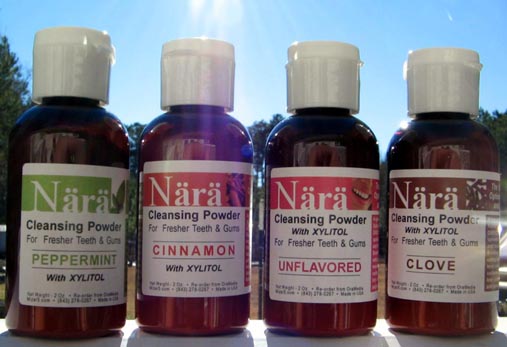
More Articles on Beating Gum Disease  |  Make Your Own Toothpaste & Powders

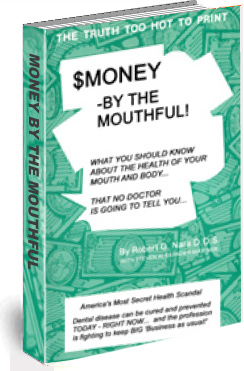
Read Money by the Mouthful and How to Become Dentally Self Sufficient!

Subscribe
to the OraMedia Newsletter for Dental Self Sufficiency

Links | Newsletters | Products | FAQ